
The Importance of Pet Dental Care
Does your pet have bad breath? Is their appetite decreasing? Do they seem less interested in chewing on toys and bones? Do their gums bleed when they play with chew toys? Does your pet have red, swollen gums? Does your pet drool a lot? Any of these symptoms may indicate that your pet could benefit from an oral health exam and dental cleaning.
Good oral health is important to your pet for a multitude of reasons: better heart, lung, and kidney health, better quality of life, longer life expectancy, and a more intimate relationship with you. Regular oral exams and treatment also give the veterinarian a chance to find any trouble areas, such as teeth that need to be extracted or masses in the mouth.
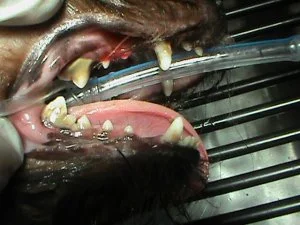
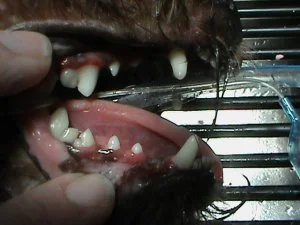
What to Expect: Your Pet’s Dental Cleaning
A dental cleaning for your pet is similar in many ways to your visit to the dentist. The primary difference is that your pet requires anesthesia for their cleaning. For your pet’s safety, IV fluids and gas anesthesia are used during your pet’s dental appointment. During the cleaning, the veterinarian first performs an overall exam of your pet’s mouth. Your pet’s teeth are cleaned and polished with equipment much like your dentist uses. If any teeth need to be extracted for your pet’s health, that is performed, as well. Finally, a Teflon-like sealant is applied to your pet’s teeth to help prevent the buildup of tartar in the six months after the cleaning. Your pet will have a follow-up appointment with the veterinarian to examine any extraction sites and to discuss at-home follow-up care.
At-Home Follow-up Care
There are several things you can do at home after a dental cleaning to help keep your pet’s teeth cleaner and their health better. Ideally, you’d be brushing your dog’s teeth daily. Plaque, which you can brush off the teeth, turns to tartar, which you cannot brush off, in 48 hours. So, to be effective, you must be brushing at least every 48 hours.
How to Brush Your Dog’s Teeth
Some pets are easier to accomplish this with than others, so our next best defense against poor oral health is the use of CET chews. These chews are soaked in an antibacterial solution, the same one used in surgical preparation. These chews kill the bacteria in your pet’s mouth that are responsible for converting plaque to tartar. There are a lot of chews on the market, but none as effective as the CET chews.
Additionally, we recommend a prescription diet to complement your pet’s dental cleaning and help keep their teeth clean for longer. Science Diet t/d is a prescription diet that mechanically keeps the tartar from building up on the teeth. Feeding Science Diet t/d daily as your pet’s regular diet will help extend the length of time between dental cleanings.