
Understanding Flea Allergy in Pets
When a bee stings a person allergic to bees, it affects their respiratory system, causing difficulty breathing. Similarly, when a flea bites a flea-allergic animal, it triggers severe itching in their skin. When the skin itches, the animal will often chew, bite, and pull hair. The itchiest places in flea-allergic dogs and cats tend to be over the top of the tail and along the insides of the back legs. Often, secondary infections can develop from the animal scratching and biting at the skin.
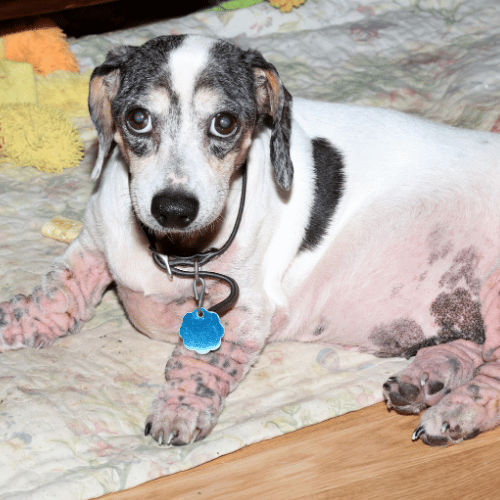
Signs of Flea Allergy Dermatitis:
Affected dogs will develop hair thinning over the rump, back legs, and tail, in addition to the excessive itching/scratching. Cats with FAD often remove their hair and develop tiny scabbed bumps (miliary dermatitis).
- Skin inflammation
- Hair loss
- Scabs and crusts
- Oozing sores (hot spots)
- Unpleasant odor (resulting from secondary infection)
- Presence of fleas
- Blackish debris in the hair (flea feces)
Treating FAD: Comprehensive Flea Control
The only effective way to treat FAD is to prevent flea bites by removing fleas from a pet and their environment. There are many safe, effective flea-control products. Our favorite for dogs is Nexgard® chewable, and our favorite for cats is Advantage Mult. Both of these products are easy to administer and kill fleas before they have a chance to cause an allergic reaction in the pets.
Fleas reproduce very quickly and in large quantities. Fleas in any environment can be quite difficult to eliminate, as the flea cycle can be difficult to break (See the fleas and ticks informational section of the website for more detailed information.) Treating all the pets in a home for six consecutive months is a minimum requirement for eliminating the flea problem in a particular area. Complete flea treatment, including all pets in the family, the yard, and the inside of the home, is a must. Vacuuming rugs, throwing out old pet bedding, and laundering other items may also be recommended to help remove fleas from a pet’s environment. Secondary skin infections that develop as a result of FAD may need to be treated with antibiotics or antifungal medications. Sometimes, additional medications may be required to relieve the pet’s itching in the short term.